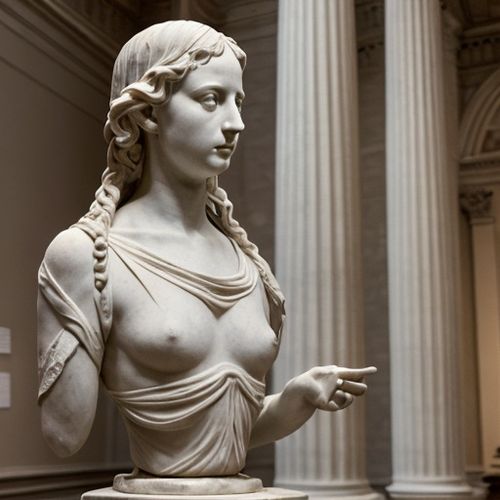
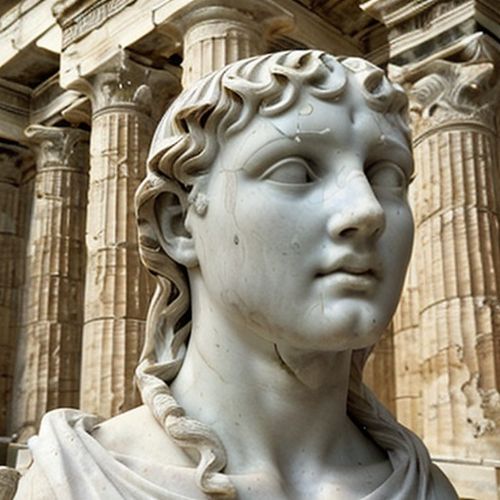
The once pristine white marble of ancient Greek sculptures has long been a symbol of classical beauty and purity. However, recent advancements in AI-powered color restoration algorithms are challenging this monochromatic perception, revealing a vibrant and polychromatic past that transforms our understanding of ancient art.
For nearly five centuries, Renaissance ideals and neoclassical interpretations conditioned us to view Greco-Roman sculptures through a lens of austerity. The weathering of pigments over millennia, combined with the cultural influence of 18th-century art historians like Johann Joachim Winckelmann, created an enduring myth of white marble perfection. Modern spectroscopic analysis and AI reconstruction now prove that these works were originally saturated with striking colors - Tyrian purple drapes, golden-yellow hair, and lapis lazuli-blue backgrounds.
The cutting-edge chromatic restoration process begins with multispectral imaging techniques that detect microscopic pigment traces invisible to the naked eye. Advanced algorithms then cross-reference these findings with chemical analysis data and historical records of Mediterranean pigment use. Machine learning models trained on surviving painted artifacts from contemporaneous cultures help predict probable color schemes with remarkable accuracy. This technological synergy has allowed researchers at institutions like the Harvard Art Museums to produce scientifically-grounded digital reconstructions that would have been unimaginable a decade ago.
One particularly revelatory case involves the famous Peplos Kore from the Acropolis Museum. Traditional displays present the statue as a pale figure with faint remnants of color. AI-assisted reconstruction, however, reveals an entirely different artifact - a vividly painted surface with patterned garments and lifelike skin tones. The algorithm detected over fifteen distinct pigments including rare Egyptian blue and cinnabar red, suggesting the sculpture was repainted multiple times during its active use in antiquity. Such findings fundamentally alter our perception of these objects as static art pieces, instead positioning them as dynamic, evolving cultural artifacts.
Critics of the technology argue that algorithmic color prediction introduces modern biases into ancient artifacts. However, proponents counter that the scientific rigor of these methods - which rely on physical evidence rather than artistic interpretation - makes them more reliable than previous reconstruction attempts. The AI systems incorporate contextual data about pigment availability, cultural color symbolism, and artistic conventions to minimize speculative elements. At the British Museum's recent "Chromatopia" exhibition, side-by-side comparisons between traditional white reconstructions and AI-colorized versions demonstrated how profoundly color transforms our emotional and aesthetic response to classical art.
The implications extend beyond art history. By analyzing pigment distribution patterns across different sculpture types, researchers are gaining insights into ancient workshop practices and artistic collaborations. The AI models have identified consistent color palettes for specific deities - Aphrodite statues frequently contain expensive imported pigments, while Dionysian figures show more experimental color combinations. Such findings provide tangible evidence about religious practices, economic networks, and even cross-cultural influences in the ancient Mediterranean world.
Looking forward, museums are beginning to integrate these discoveries into their exhibitions. The Vatican Museums recently debuted an augmented reality experience that allows visitors to see sculptures in their original colors through tablet devices. Meanwhile, academic debates continue about whether physical reconstructions should attempt to recreate these polychrome surfaces. As the technology progresses, we may witness a paradigm shift in how classical art is displayed and understood - not as monuments to idealized whiteness, but as vibrant remnants of an unapologetically colorful ancient world.
The marriage of artificial intelligence and classical archaeology represents more than technical achievement; it's a philosophical recalibration of historical perception. Each algorithmically restored pigment particle chips away at centuries of artistic dogma, reminding us that the past was never truly past - and certainly never monochrome. As these digital reconstructions circulate through academic circles and public exhibitions alike, they promise to permanently recolor our imagination of antiquity.
By Daniel Scott/Apr 12, 2025

By Emily Johnson/Apr 12, 2025
By Sarah Davis/Apr 12, 2025

By Ryan Martin/Apr 12, 2025
By Emma Thompson/Apr 12, 2025
By George Bailey/Apr 12, 2025
By Rebecca Stewart/Apr 12, 2025
By Elizabeth Taylor/Apr 12, 2025

By Samuel Cooper/Apr 12, 2025
By James Moore/Apr 12, 2025

By David Anderson/Apr 12, 2025
By George Bailey/Apr 12, 2025
By Sarah Davis/Apr 12, 2025

By Benjamin Evans/Apr 12, 2025
By Michael Brown/Apr 12, 2025
By Victoria Gonzalez/Apr 12, 2025

By David Anderson/Apr 12, 2025

By David Anderson/Apr 12, 2025
By Olivia Reed/Apr 12, 2025
By Rebecca Stewart/Apr 12, 2025