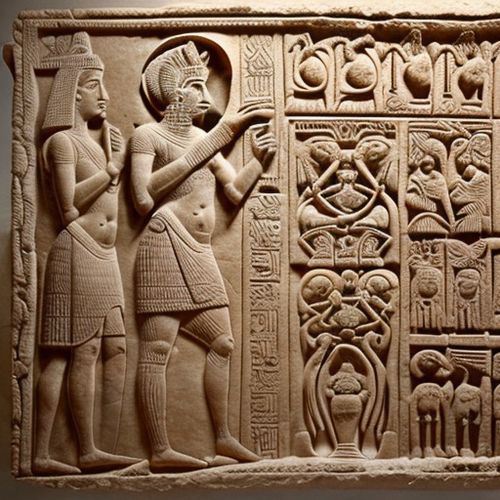
The British Museum has recently unveiled groundbreaking discoveries about the ancient Assyrian reliefs in its collection, thanks to the innovative use of CT scanning technology. These intricate stone carvings, dating back to the 9th to 7th centuries BCE, have long fascinated historians and archaeologists. However, the tools and techniques employed by Assyrian craftsmen remained shrouded in mystery—until now. By peering beneath the surface of these artifacts, researchers have uncovered secrets that rewrite our understanding of ancient artistry.
The Assyrian reliefs, originally adorning the palaces of kings such as Ashurnasirpal II and Sennacherib, depict scenes of warfare, mythology, and courtly life with astonishing detail. For years, scholars debated whether these works were created using simple chisels or more sophisticated tools. The British Museum’s team, led by Dr. Jonathan Taylor, curator of the Middle East collections, turned to CT scanning to settle the debate. The non-invasive technology allowed them to examine the reliefs’ tool marks at a microscopic level without risking damage to the fragile surfaces.
What the scans revealed was nothing short of revolutionary. The tool marks showed variations in depth and angle that suggested the use of specialized instruments, some of which had curved or serrated edges. These findings contradict earlier assumptions that Assyrian artisans relied solely on flat chisels. Instead, the evidence points to a diverse toolkit, including gouges and fine-pointed implements, which enabled the creation of the reliefs’ intricate textures and lifelike details. The precision of these tools indicates a highly developed craft tradition, one that required years of apprenticeship to master.
The research also shed light on the collaborative nature of Assyrian artistry. CT scans of unfinished reliefs revealed multiple hands at work, with different artisans contributing to various sections of a single panel. Some areas showed rough, initial carving, while others displayed the refined touches of a master sculptor. This discovery challenges the romanticized notion of a lone genius toiling in isolation. Instead, it paints a picture of a bustling workshop where skilled craftsmen worked in unison, each specializing in a particular aspect of the relief-making process.
One of the most surprising findings was the presence of subtle underdrawings beneath the carved surfaces. These preliminary sketches, visible only through CT scanning, suggest that Assyrian artists planned their compositions carefully before making the first cut. The underdrawings varied in style—some were highly detailed, while others were mere outlines—indicating that artists adapted their approach depending on the complexity of the scene. This revelation places Assyrian art closer to later traditions, such as Renaissance fresco painting, where underdrawings were a common preparatory step.
The British Museum’s findings have far-reaching implications for the study of ancient Near Eastern art. By identifying the specific tools used, researchers can now reconstruct the technical processes behind these masterpieces with greater accuracy. This, in turn, allows for more informed conservation efforts, as restorers can tailor their methods to match the original techniques. Moreover, the discovery of underdrawings opens new avenues for understanding Assyrian artistic training and the transmission of stylistic conventions across generations.
Beyond academia, the project highlights the transformative potential of modern technology in unlocking the secrets of the past. CT scanning, once confined to medical diagnostics, has become an indispensable tool for archaeologists and art historians. Its ability to reveal hidden layers and structures without physical intervention ensures that precious artifacts remain intact for future study. The British Museum’s pioneering work sets a precedent for other institutions to follow, demonstrating how cutting-edge science can breathe new life into ancient wonders.
The Assyrian reliefs, now understood in greater depth than ever before, stand as a testament to human ingenuity across millennia. From the skilled hands that carved them nearly three thousand years ago to the scientists who unravel their mysteries today, these works continue to inspire awe and admiration. As the British Museum prepares to showcase its findings in an upcoming exhibition, visitors will have the opportunity to appreciate these ancient masterpieces not just for their beauty, but for the remarkable craftsmanship that brought them into being.
By Daniel Scott/Apr 12, 2025

By Emily Johnson/Apr 12, 2025
By Sarah Davis/Apr 12, 2025

By Ryan Martin/Apr 12, 2025

By Emma Thompson/Apr 12, 2025
By George Bailey/Apr 12, 2025
By Rebecca Stewart/Apr 12, 2025
By Elizabeth Taylor/Apr 12, 2025
By Samuel Cooper/Apr 12, 2025
By James Moore/Apr 12, 2025
By David Anderson/Apr 12, 2025
By George Bailey/Apr 12, 2025
By Sarah Davis/Apr 12, 2025
By Benjamin Evans/Apr 12, 2025
By Michael Brown/Apr 12, 2025
By Victoria Gonzalez/Apr 12, 2025

By David Anderson/Apr 12, 2025
By David Anderson/Apr 12, 2025
By Olivia Reed/Apr 12, 2025
By Rebecca Stewart/Apr 12, 2025