The much-anticipated opening of Paris's groundbreaking "Floating Art Island" has been postponed indefinitely due to alarming pollution levels in the Seine River. This ambitious cultural project, designed to become a new landmark for the French capital, now faces an uncertain timeline as authorities scramble to address water quality concerns that could jeopardize both public safety and artistic installations.
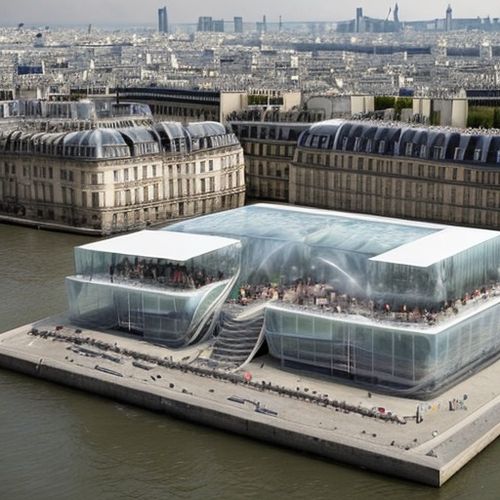
Originally slated to welcome visitors this summer, the artificial island—a collaboration between renowned architects and contemporary artists—was conceived as a series of interconnected platforms hosting galleries, performance spaces, and lush gardens. The delay comes as a significant blow to Paris's cultural calendar, particularly with the city preparing to host the 2024 Olympic Games, during which the Seine is expected to feature prominently in opening ceremonies and aquatic events.
Recent water tests revealed dangerous concentrations of E. coli bacteria and other contaminants, levels that far exceed safety standards for recreational activities. "When we began construction three years ago, water quality showed gradual improvement," explained project director Élodie Marchand. "The sudden deterioration this spring caught everyone off guard. We cannot in good conscience open an attraction where visitors might be exposed to health risks."
The floating complex's innovative design—which includes submerged exhibition spaces with glass walls offering underwater views—has become its greatest vulnerability. Persistent sewage overflows from Paris's aging infrastructure, combined with unusually heavy rainfall this season, have transformed the river into what environmentalists call "a bacterial soup." Several prototype installations already mounted on the platforms show visible damage from the polluted water, with corrosion appearing on metal components and algal blooms clouding transparent surfaces.
Mayor Anne Hidalgo's office maintains that emergency measures are being implemented, including accelerated upgrades to wastewater treatment plants and the installation of temporary retention basins. However, these solutions require months to take effect, potentially pushing the art island's debut beyond the Olympics timeframe. The postponement has reignited debates about Paris's ability to balance ambitious ecological promises with practical realities, especially given the city's pledge to make the Seine swimmable by 2025—a goal now appearing increasingly optimistic.
International artists involved in the project express mixed reactions. British sculptor Rachel Whiteread, whose large-scale piece was among the first installed, remains philosophical: "The river's refusal to cooperate creates an unintended commentary about humanity's relationship with nature." Meanwhile, Japanese collective teamLab has demanded their light-based works be removed immediately, citing irreparable damage from waterborne pollutants.
Financial repercussions are mounting, with insurers questioning coverage for art pieces exposed to hazardous conditions. The delay also impacts hundreds of contracted workers—from security personnel to aquatic horticulturists—who face suspended employment. Cultural critics note the irony that a project celebrating environmental themes now finds itself besieged by ecological problems, with some suggesting the island should incorporate the pollution crisis into its programming as a form of "institutional critique."
As engineers work on temporary filtration systems and artists reconsider their submissions, the Seine continues its muddy flow past the silent platforms. The floating galleries stand empty, their reflective surfaces mirroring not the anticipated crowds of art enthusiasts, but the concerned faces of officials peering down from passing inspection boats. What was meant to be a triumphant fusion of art and nature has instead become a stark reminder of urban waterways' fragility in the Anthropocene era.
The postponement raises uncomfortable questions about other major cities developing similar aquatic cultural projects. From New York's Hudson River park expansions to Bangkok's Chao Phraya riverside initiatives, planners worldwide are taking note of Paris's struggles. The Floating Art Island may eventually open its gangways to the public, but its troubled genesis will likely influence how municipalities approach waterfront development in an age of climate uncertainty and environmental awareness.
By Daniel Scott/Apr 12, 2025
By Emily Johnson/Apr 12, 2025
By Sarah Davis/Apr 12, 2025
By Ryan Martin/Apr 12, 2025
By Emma Thompson/Apr 12, 2025
By George Bailey/Apr 12, 2025
By Rebecca Stewart/Apr 12, 2025
By Elizabeth Taylor/Apr 12, 2025
By Samuel Cooper/Apr 12, 2025
By James Moore/Apr 12, 2025
By David Anderson/Apr 12, 2025
By George Bailey/Apr 12, 2025
By Sarah Davis/Apr 12, 2025
By Benjamin Evans/Apr 12, 2025
By Michael Brown/Apr 12, 2025
By Victoria Gonzalez/Apr 12, 2025

By David Anderson/Apr 12, 2025
By David Anderson/Apr 12, 2025
By Olivia Reed/Apr 12, 2025
By Rebecca Stewart/Apr 12, 2025