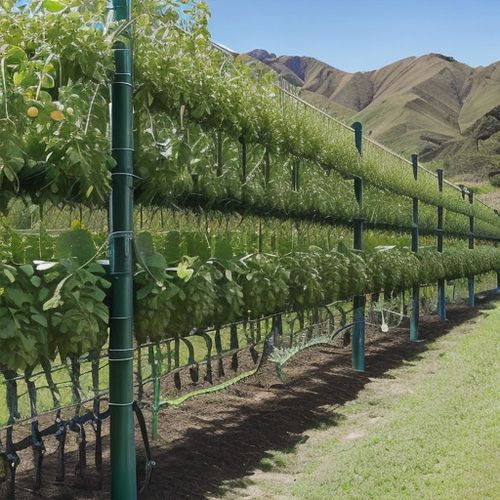
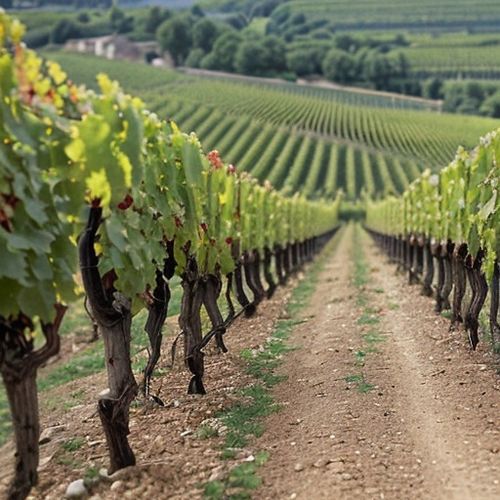
The orientation of grapevine rows in French vineyards is a topic that goes far beyond mere aesthetics or tradition. It’s a decision rooted in centuries of viticultural wisdom, climatic adaptation, and the relentless pursuit of quality. French winemakers have long understood that the direction in which vines face can dramatically influence the character of the wine, from the ripening of the grapes to the management of diseases. This subtle yet critical choice speaks volumes about the interplay between nature and human ingenuity.
In regions like Bordeaux, where the maritime climate brings a mix of sunshine and humidity, the alignment of vine rows often follows a north-south orientation. This allows for even sun exposure on both sides of the canopy, promoting uniform ripening. The Garonne River’s moderating influence further complicates the equation, as vineyards closer to its banks benefit from reflected sunlight and improved air circulation. Here, the rows are frequently positioned to harness these microclimatic advantages, ensuring that Cabernet Sauvignon and Merlot grapes achieve optimal phenolic maturity without excessive sugar accumulation.
Contrastingly, in Burgundy, where Pinot Noir and Chardonnay reign supreme, east-west orientations are more common. The region’s continental climate, with its sharper temperature shifts, demands a different approach. Morning sun exposure warms the vines gently, while the afternoon shade protects the delicate berries from scorching. This balance is crucial for preserving acidity and aromatic complexity, hallmarks of Burgundian wines. The limestone-rich soils further interact with sunlight in nuanced ways, making row direction a key factor in expressing terroir.
Provence presents yet another scenario. The relentless southern sun and Mistral winds necessitate vine orientations that mitigate heat stress while allowing the wind to dry moisture quickly, reducing fungal risks. Many vineyards adopt a northeast-southwest alignment, creating a natural compromise between sun capture and wind channeling. This strategy is particularly vital for rosé production, where fresh fruit flavors and vibrant color depend on careful canopy management.
Beyond climate, topography plays an equally decisive role. In the steep slopes of the Northern Rhône, where Syrah clings to near-vertical hillsides, rows often run perpendicular to the gradient. This not only minimizes erosion but also maximizes sun interception in a region where every ray counts. The practice, known as "planting along the contour," showcases how French vignerons turn geographical challenges into vinous virtues. Meanwhile, in flatter appellations like Champagne, the orientation may seem less critical at first glance—until one considers how subtle variations in sunlight exposure influence the precision of sparkling wine blends.
Modern technology has brought new dimensions to this ancient consideration. Satellite imaging and solar path modeling now allow precise calculations of ideal row directions for new plantings. Yet many estates resist over-optimization, recognizing that tradition often encapsulates hard-won empirical knowledge. The debate between solar efficiency and time-tested methods continues quietly in vineyard conferences and cellar conversations across France.
What becomes clear is that there’s no universal answer—only a series of thoughtful adaptations. The French approach to vine orientation isn’t about rigid rules but about interpreting landscapes. It’s a dialogue between vine and environment, where each decision echoes through generations of bottles. From the gravelly plains of Pessac-Léognan to the granite hills of Beaujolais, the angle at which vines face the sun remains one of winemaking’s most elegant variables.

By Victoria Gonzalez/Apr 14, 2025

By Sophia Lewis/Apr 14, 2025

By Laura Wilson/Apr 14, 2025
By William Miller/Apr 14, 2025
By Victoria Gonzalez/Apr 14, 2025
By Natalie Campbell/Apr 14, 2025
By Benjamin Evans/Apr 14, 2025
By George Bailey/Apr 14, 2025
By Amanda Phillips/Apr 14, 2025

By Joshua Howard/Apr 14, 2025
By Emily Johnson/Apr 14, 2025
By Victoria Gonzalez/Apr 14, 2025
By Grace Cox/Apr 14, 2025

By Christopher Harris/Apr 14, 2025
By David Anderson/Apr 14, 2025
By Grace Cox/Apr 14, 2025
By Thomas Roberts/Apr 14, 2025
By Olivia Reed/Apr 14, 2025

By William Miller/Apr 14, 2025

By Grace Cox/Apr 14, 2025