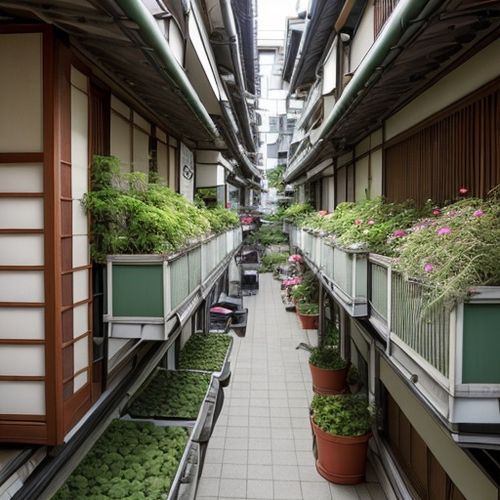
In Japan's densely populated urban areas, balcony gardening has become an essential part of daily life for many residents. However, what most foreign observers don't realize is that these green sanctuaries are governed by strict weight regulations that reflect Japan's unique approach to safety and communal living. These limitations aren't arbitrary restrictions but carefully calculated measures born from architectural standards and collective responsibility in a country where earthquakes and typhoons are frequent occurrences.
The typical Japanese apartment balcony has a maximum weight capacity ranging from 150 to 300 kilograms, depending on the building's age and construction standards. This includes not just potted plants but all items placed on the balcony - furniture, storage boxes, and even the resident's weight when standing outside. What might surprise Western gardeners is that these regulations are strictly enforced through lease agreements and building management rules, with periodic inspections being common in many apartment complexes.
Architectural considerations play a pivotal role in these restrictions. Unlike Western-style balconies that are often constructed as extensions of the building's main structure, Japanese balconies are frequently designed as "external escape routes" that must remain clear for emergency evacuation. Many serve as access points between adjacent units during disasters, explaining why clutter-free space maintenance takes precedence over gardening ambitions. The lightweight construction methods common in Japanese buildings, while excellent for earthquake resistance, simply aren't designed to support the heavy ceramic pots and extensive container gardens popular in other countries.
Seasonal factors further complicate balcony gardening within these weight constraints. During typhoon season from June to October, management companies often issue specific directives about securing or removing balcony items entirely. The combination of high winds and saturated soil in planters can create dangerous conditions, with the added weight of rainwater potentially pushing total loads beyond safe limits. This has led to innovative gardening solutions unique to Japan, where weight distribution becomes as important as sunlight exposure in plant care routines.
Cultural attitudes toward shared space significantly influence how these regulations are perceived and followed. The Japanese concept of "meiwaku" (avoiding causing trouble to others) makes residents particularly conscientious about balcony usage. Even when not explicitly required, many gardeners voluntarily use lightweight plastic pots instead of heavier alternatives, and choose compact plant varieties that won't overwhelm the space. This collective mindfulness extends to water drainage concerns, with special mats and trays being nearly universal to prevent runoff from reaching neighbors' spaces below.
The commercial market has responded creatively to these constraints. Garden centers in urban Japan prominently feature ultra-lightweight planters made from advanced resins and foamed materials that mimic traditional ceramics at a fraction of the weight. Soil manufacturers offer special low-density mixes blended with perlite and other lightweight amendments. Even the plant selection reflects these limitations, with dwarf fruit trees and miniature vegetable varieties being developed specifically for balcony culture. Entire product lines exist solely to help gardeners maximize their greenery while staying within the strict weight allowances.
Building codes have evolved alongside these gardening practices. Post-1981 earthquake standards led to more conservative weight calculations for all balcony installations. Modern construction often includes reinforced areas specifically marked for heavier items, while other sections remain lightweight. Some newer developments incorporate clever weight-distribution systems into the balcony design itself, with built-in planter rails that direct loads toward support columns. These innovations demonstrate how regulatory limitations can spur architectural creativity when approached thoughtfully.
For foreign residents accustomed to more lenient balcony use, adapting to these standards can be challenging. Expat gardening communities often share tips about "weight budgeting" - calculating the combined mass of all balcony items to stay within limits. Digital scales for weighing planters have become common household tools, and smartphone apps now help track cumulative weights across seasons as plants grow and soil moisture changes. This meticulous approach transforms balcony gardening into a precise science rather than the casual hobby it might represent elsewhere.
The environmental benefits of these restrictions are rarely discussed but equally important. Lightweight gardening necessarily means smaller-scale cultivation, which paradoxically aligns with Japan's traditional appreciation for miniature landscapes and bonsai aesthetics. The limitations encourage quality over quantity, with each plant being carefully selected and maintained. Water conservation becomes inherent when container sizes are restricted, and the focus shifts to efficient growing methods rather than expansive displays. In this way, the weight regulations inadvertently promote sustainable urban gardening practices.
Looking forward, technological advancements promise to expand possibilities within these constraints. Aeroponic and hydroponic systems designed specifically for Japanese balconies are eliminating heavy soil altogether. Smart planters with integrated water reservoirs reduce weight fluctuations from manual watering. As urban density increases and younger generations embrace apartment living, these weight-conscious gardening solutions will likely become more sophisticated, proving that limitations can breed innovation rather than stifle it.
Ultimately, Japan's balcony weight restrictions reveal much about how the nation balances personal expression with communal safety. These regulations have given rise to a distinctive container gardening culture that prizes ingenuity and restraint in equal measure. What might initially appear as bureaucratic overreach actually demonstrates a profound understanding of urban coexistence - where individual gardening passions must harmonize with architectural realities and neighborly consideration. The resulting practices offer valuable lessons for cities worldwide grappling with similar challenges of dense living and environmental pressures.

By Victoria Gonzalez/Apr 14, 2025

By Sophia Lewis/Apr 14, 2025

By Laura Wilson/Apr 14, 2025
By William Miller/Apr 14, 2025

By Victoria Gonzalez/Apr 14, 2025
By Natalie Campbell/Apr 14, 2025

By Benjamin Evans/Apr 14, 2025
By George Bailey/Apr 14, 2025
By Amanda Phillips/Apr 14, 2025

By Joshua Howard/Apr 14, 2025
By Emily Johnson/Apr 14, 2025
By Victoria Gonzalez/Apr 14, 2025
By Grace Cox/Apr 14, 2025

By Christopher Harris/Apr 14, 2025
By David Anderson/Apr 14, 2025

By Grace Cox/Apr 14, 2025
By Thomas Roberts/Apr 14, 2025
By Olivia Reed/Apr 14, 2025

By William Miller/Apr 14, 2025

By Grace Cox/Apr 14, 2025