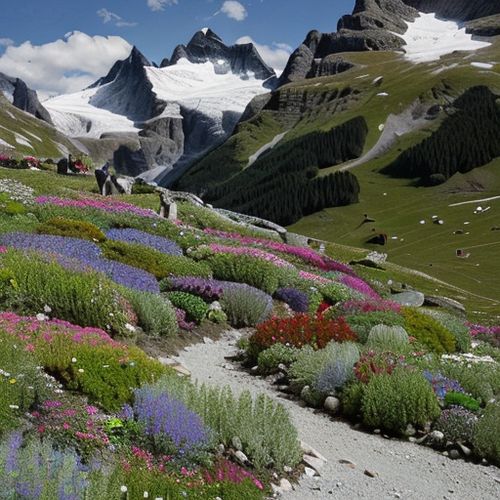
The Swiss Alpine gardens, renowned for their breathtaking beauty and unique biodiversity, face significant challenges due to the harsh mountainous environment. The thin, rocky soils and extreme weather conditions make it difficult for plants to thrive. Over the years, Swiss horticulturists and environmental scientists have developed innovative soil improvement techniques to transform these barren landscapes into flourishing gardens. These efforts not only enhance the aesthetic appeal but also contribute to the conservation of rare alpine flora.
The foundation of any successful garden lies in its soil, and the Swiss Alps present a particularly demanding case. The natural soil in these regions is often acidic, low in organic matter, and poorly structured. To combat these issues, experts have adopted a multi-faceted approach. One key strategy involves the careful incorporation of organic compost, which boosts nutrient levels and improves water retention. Locally sourced materials, such as decomposed leaf litter and manure, are preferred to maintain ecological balance. Additionally, the introduction of mycorrhizal fungi has proven highly effective. These symbiotic organisms form relationships with plant roots, enhancing nutrient uptake and overall plant health.
Another critical aspect of soil improvement in Alpine gardens is the management of drainage. The steep slopes and heavy rainfall in mountainous areas often lead to soil erosion and waterlogging. To address this, terraced gardening has been widely implemented. By creating level platforms, water is evenly distributed, reducing runoff and allowing plants to absorb moisture more efficiently. Furthermore, the use of permeable ground covers, such as gravel and sand, helps maintain optimal soil aeration. These measures not only prevent root rot but also create a stable environment for delicate alpine species.
The unique microclimates of the Swiss Alps demand tailored solutions for different elevations and exposures. South-facing slopes, for instance, receive more sunlight and heat, leading to faster evaporation. Here, mulching with organic materials like straw or bark chips helps retain soil moisture and regulate temperature. On the other hand, north-facing slopes remain cooler and more humid, requiring additional drainage and soil warming techniques. The use of dark-colored stones or thermal blankets can absorb sunlight and gently raise soil temperatures, promoting better plant growth.
Beyond physical amendments, Swiss gardeners have also turned to bioengineering to enhance soil fertility. The cultivation of nitrogen-fixing plants, such as clover and lupines, has become a common practice. These plants naturally enrich the soil by converting atmospheric nitrogen into a form usable by other vegetation. Crop rotation and intercropping further prevent soil depletion, ensuring long-term sustainability. Such methods not only improve soil quality but also reduce the need for chemical fertilizers, aligning with Switzerland's strong commitment to environmental preservation.
The success of these soil improvement efforts is evident in the vibrant Alpine gardens that attract visitors from around the world. However, the work is far from over. Climate change poses new challenges, with shifting weather patterns and unpredictable frosts threatening delicate ecosystems. Swiss researchers continue to experiment with innovative techniques, such as biochar application and hydroponic systems, to future-proof these gardens. The lessons learned from the Swiss Alpine soil improvement projects offer valuable insights for mountainous regions worldwide, demonstrating how human ingenuity can harmonize with nature to create sustainable beauty.

By Victoria Gonzalez/Apr 14, 2025

By Sophia Lewis/Apr 14, 2025

By Laura Wilson/Apr 14, 2025
By William Miller/Apr 14, 2025

By Victoria Gonzalez/Apr 14, 2025
By Natalie Campbell/Apr 14, 2025
By Benjamin Evans/Apr 14, 2025
By George Bailey/Apr 14, 2025
By Amanda Phillips/Apr 14, 2025
By Joshua Howard/Apr 14, 2025
By Emily Johnson/Apr 14, 2025
By Victoria Gonzalez/Apr 14, 2025
By Grace Cox/Apr 14, 2025
By Christopher Harris/Apr 14, 2025
By David Anderson/Apr 14, 2025
By Grace Cox/Apr 14, 2025

By Thomas Roberts/Apr 14, 2025

By Olivia Reed/Apr 14, 2025

By William Miller/Apr 14, 2025

By Grace Cox/Apr 14, 2025